Emissions Testing for Delivery and Last Mile Fleets in Atlanta: The Complete Guide
A delivery fleet does not have downtime built into its business model. Every van and vehicle is expected to run its route every day, and a vehicle sitting idle means a route goes uncovered, a delivery window is missed, or another driver scrambles to absorb the extra stops. In metro Atlanta, most gasoline vehicles need an annual emissions test to stay registered, and for a delivery or last-mile operation, fitting that requirement into a schedule with zero slack is a real operational challenge.
This guide covers what delivery and last-mile fleets in Atlanta need to know about emissions compliance, why daily route pressure makes this harder than for a typical fleet, and how on-site testing keeps vehicles running their routes instead of sitting in a line.
Why delivery and last-mile fleets face constant pressure
Most fleets can absorb a vehicle being out for a few hours here and there. A delivery or last-mile operation runs on daily route coverage, often with contractual service commitments to a retailer, logistics company, or delivery platform. Pulling a van off its route for testing doesn’t just cost that vehicle’s time; it can mean a missed delivery window, a route split across other drivers, or a service-level commitment not met that day.
This differs from a fleet that runs predictable point-to-point trips. Delivery routes are dense, time-boxed, and repeated daily, leaving little natural downtime to work testing into without a plan.
Which vehicles need testing
Most gasoline vans, cars, and light trucks registered in the 13-county Metro Atlanta emissions region must pass an annual emissions test before renewing their registration. For a delivery fleet, this generally covers most gasoline vehicles on the road. Some categories are exempt:
- The three newest model years, a window that shifts forward every year
- Vehicles 25 model years old and older, rare in an active delivery fleet
- Diesel-powered vehicles
- Fully electric vehicles, increasingly common as delivery fleets add electric vans
Because many delivery operations are actively adding newer vehicles and electric vans to their fleets, the exempt share of a delivery fleet can shift more from year to year than in a fleet that replaces vehicles less frequently. Reviewing exemptions annually, rather than assuming last year’s list still applies, avoids both wasted testing and missed compliance.
The real cost of downtime for a delivery operation
For most businesses, downtime is measured in lost productivity. For a delivery fleet, downtime is measured against a commitment, whether that is a delivery window promised to a customer, a service level agreement with a logistics partner, or a daily route count the business is contracted to complete.
Sending a van to a testing station takes it out of service for the visit itself. It also throws off a driver’s schedule for the day, and it often means another vehicle has to absorb extra stops to keep the route on track. When this happens across a fleet with dozens of vehicles on staggered renewal dates, it becomes a recurring disruption rather than an occasional inconvenience.
Why staggered renewal dates are especially disruptive here
Delivery fleets often grow through steady, ongoing vehicle additions rather than a single large purchase, so renewal dates spread across the calendar with no natural clustering. Unlike an operation that can plan one testing event a year, a delivery fleet manager may be facing a vehicle or two coming due in any given week.
Without a system to track this, testing becomes background noise that constantly interrupts route planning, a small fire to put out every week rather than a task that gets handled and forgotten.
How on-site testing fits a delivery operation
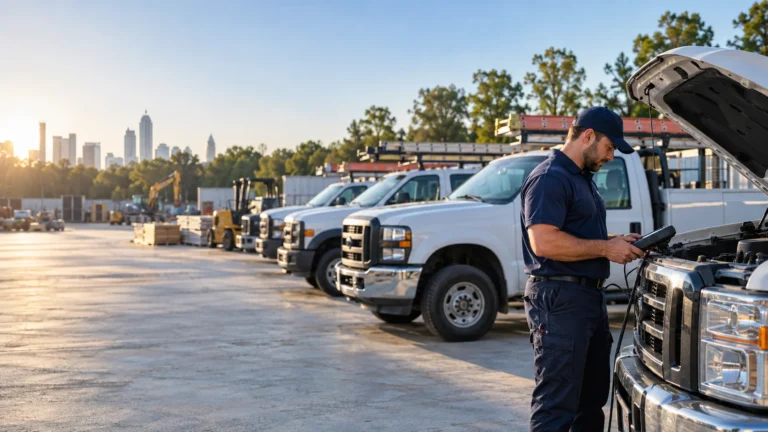
Mobile emissions testing is built for exactly this kind of daily pressure. Instead of pulling a van off its route to send it to a station, a certified mobile unit comes to your depot or yard and tests vehicles before or after their route window, without disrupting the day’s coverage.
The process is designed to work around a route-based schedule:
- Share your list of vehicles coming due for testing and your depot location.
- We schedule a visit around your route windows, such as early morning before vehicles head out or after they return.
- We test the batch on site at your depot or yard.
- We report passing results to the state the same day.
- You receive one consolidated invoice at a flat $25 per vehicle, with no trip charges or hidden fees.
Because testing happens at your depot rather than at a separate location, you can schedule it around the natural gaps in a route-based operation instead of forcing a vehicle out of its coverage window.
Building emissions testing into a delivery operation’s routine
Delivery fleets that avoid last-minute scrambles tend to follow a consistent approach.
Track renewal dates against the route schedule. Keep registration renewal dates visible alongside route assignments, so a vehicle coming due can be flagged before it becomes urgent.
Schedule testing around route windows. Time testing visits for early morning before departure or late afternoon after return, so vehicles are tested without missing a route.
Batch by depot. If the operation runs multiple depots or yards, group vehicles by location and schedule a visit per site rather than trying to coordinate one visit across scattered locations.
Flag failures for immediate repair. A failed vehicle needs to move to repair right away, since every day it sits is a day another vehicle has to cover its route.
Review electric and newest-model-year exemptions each year. As delivery fleets add newer and electric vehicles more frequently than other industries, exemption status can change fleet-wide from one year to the next.
Frequently asked questions
Can you test vehicles before or after their route window? Yes. We schedule visits around your route timing, such as early morning before departure or after vehicles return, so testing does not compete with route coverage.
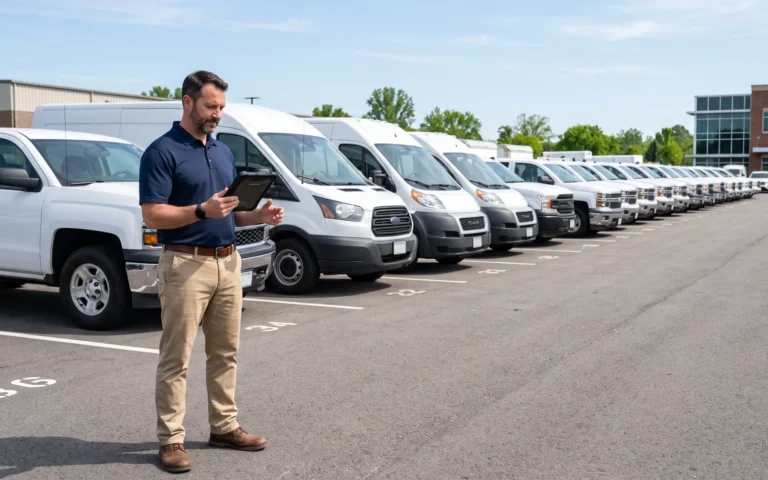
Can you test our whole fleet in one visit? Yes. We handle everything from a handful of vans to a large delivery fleet in one scheduled visit, with one consolidated invoice.
How fast are results available? We post passing results to the state the same day so a vehicle can return to its route without delay.
Do you serve multiple depots across metro Atlanta? Yes. We cover all 13 counties in the metro Atlanta emissions region so that we can reach vehicles across different depot or yard locations.
What happens if a van fails while it is between routes? You are notified immediately with the reason, so it can go to repair before it is assigned to its next route rather than being sent out with an expired test.
Is the price really flat regardless of fleet size? Yes. It is $25 per vehicle whether we test five vans or fifty, with no trip charges and no hidden fees.
Are electric delivery vans exempt from testing? Yes. Fully electric vehicles are exempt, along with vehicles 25 model years old or older and diesel vehicles.
Keep your routes covered, not your vehicles in line.
A delivery fleet cannot afford a vehicle sitting in a testing line while a route goes uncovered. With on-site testing, your vans get tested at your depot, around your schedule, and go right back out on the road.
Call (470) 669-0240 to schedule emissions testing at your depot anywhere in metro Atlanta. Flat $25 per vehicle, tested where you park, with same-day reporting to the state.