What Happens If a Vehicle Fails a Georgia Emissions Test? The Complete Guide
A failed emissions test stops a vehicle in its tracks. In Georgia, most gasoline vehicles need a passing emissions test before their registration can be renewed. Hence, a failure means that the vehicle cannot legally hit the road on a current registration until the issue is fixed and the test is passed. For an everyday driver, that is an inconvenience. For a dealership or fleet, it can hold up a sale, delay a delivery, or pull a vehicle out of service at the worst possible time.
This guide covers everything you need to know about a failed Georgia emissions test, from why vehicles fail to how retesting and waivers work, and how businesses that handle vehicles in volume can stop a single failure from turning into days of lost revenue.
How the Georgia emissions test works
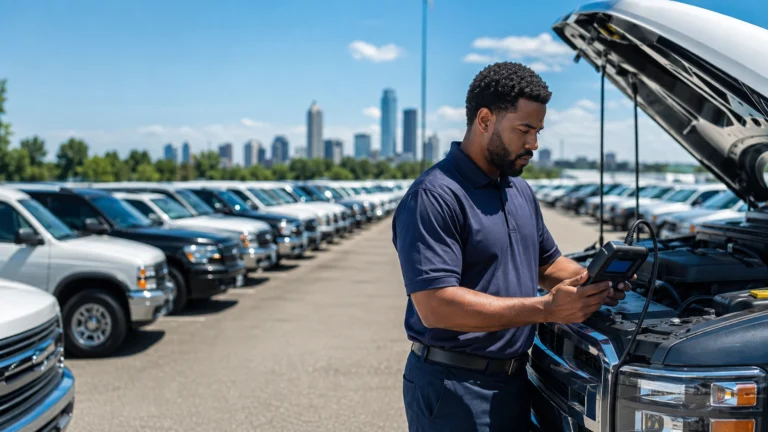
Most vehicles built in the last two and a half decades are tested through their onboard diagnostics system, often shortened to OBD. A technician connects a reader to the vehicle’s computer, which reports whether the emissions control systems are working correctly and whether any fault codes are stored. Older vehicles outside the onboard diagnostics range may receive a different style of test that measures tailpipe emissions directly.
Either way, the test produces one of two outcomes. A pass clears the vehicle for registration. A fail means the vehicle needs attention before it can be registered.
What a failed emissions test actually means
When a vehicle fails, it does not receive the passing result the state needs to renew its registration. You cannot register or re-register the vehicle until it passes. The failure is recorded, and you receive a vehicle inspection report that explains exactly why the vehicle did not pass. That report is your roadmap to fixing the problem, so hold onto it.
Failing does not mean the vehicle is unsafe to drive in the way a mechanical inspection failure might. It means the vehicle is producing emissions readings, or reporting stored fault codes, outside what the state allows.
Why vehicles fail in Georgia
There is rarely one single cause. The most common reasons a vehicle fails an onboard diagnostics-based test include the following.
An illuminated check engine light. On an onboard diagnostics test, a lit check engine light is an automatic fail, regardless of what is actually causing it. The light itself is the trigger.
Stored trouble codes. Even if the check engine light is not currently on, the vehicle’s computer can store codes from a past issue that point to an emissions-related fault.
Readiness monitors that are not set. Modern vehicles run a series of internal self-tests called readiness monitors. If the battery was recently disconnected, a code was recently cleared, or the vehicle has not been driven enough since a repair, these monitors may not have finished running, which can result in an incomplete test rather than a clean pass.
A faulty component in the emissions system. Common culprits include a failing oxygen sensor, a clogged or deteriorated catalytic converter, a leak in the evaporative emissions system, or a bad mass airflow sensor.
A communication failure. Occasionally, the test equipment cannot properly communicate with the vehicle’s computer, which can result in an inconclusive result that looks like a failure until it is retested correctly.
Excess tailpipe emissions on older vehicles. For vehicles tested by tailpipe measurement rather than onboard diagnostics, a fail usually points to a worn engine component, a fuel system issue, or an exhaust problem causing higher than allowed emissions output.
What happens right after a fail
You leave with a vehicle inspection report listing the reason or reasons for the failure. From there, the path is simple in theory. Repair the underlying issue, then bring the vehicle back for a retest. Once it passes, the result is reported to the state and the vehicle can be registered.
The catch is timing. Every day between the failed test and the passing retest is a day the vehicle cannot be registered, sold, or put back into service. For an individual driver, that might mean a few inconvenient days. For a business, it is lost revenue with a clock attached.
How retesting works
After the repair, the vehicle needs to be tested again. There is no mandatory waiting period between a repair and a retest, but the readiness monitors mentioned earlier need time and driving to reset after certain repairs, especially anything involving the battery or the computer. A vehicle brought back too soon can occasionally show an incomplete result rather than a true pass, so a short drive after the repair is often worth the time.
Once the vehicle passes, keep the repair records. They matter for the next section.
The Georgia emissions repair waiver
Georgia recognizes that some vehicles may need extensive repair work to pass, and that repair costs can climb quickly. If you have spent a state-set minimum amount on qualifying emissions-related repairs and the vehicle still will not pass, you may be eligible for a repair waiver that allows registration despite the failure.
The exact dollar threshold and the specific requirements are set and updated by the state, so confirm current details directly with the Georgia Clean Air Force before counting on a waiver for a specific vehicle. What matters most on your end is keeping detailed, itemized repair receipts, since those are what support a waiver claim.
Why failures hit dealers and fleets harder than individual drivers
For an individual, a failed test usually means one extra trip to a repair shop. For a business moving vehicles in volume, the math changes.
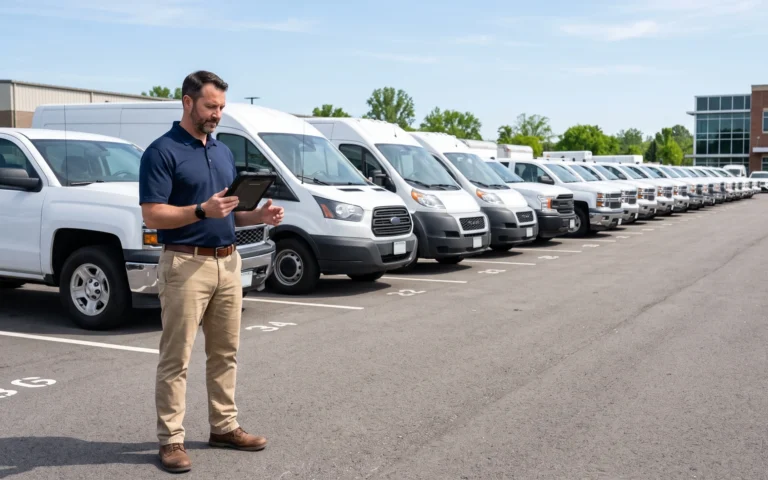
A dealer with a failed vehicle cannot cleanly close a sale, because the buyer cannot register a vehicle that has not passed. If the failure surfaces after a customer has already agreed to buy, the deal stalls at the worst possible moment, and trust takes a hit along with the timeline. A fleet with a failed vehicle loses the use of that unit until it is repaired and retested, which can disrupt routes, delivery schedules, or service commitments.
Now multiply either scenario across a lot of fifty vehicles or a fleet of thirty trucks. Even a small failure rate, something like five or ten percent, adds up to real time and real dollars across a year of turnover.
The true cost of an unexpected failure
The repair itself is often not the biggest expense. The higher cost is almost always downtime and disruption:
- A vehicle that cannot be sold while inventory carrying costs continue
- A driver or route left uncovered while a fleet vehicle is out
- Staff time spent scheduling repairs, retests, and coordinating around the delay.
- A customer experience hit when a sale that should have been simple becomes complicated.
None of these show up on the repair invoice, but they show up clearly in lost time and lost goodwill.
How to avoid delays from failed tests
Businesses that rarely get caught off guard by a failure follow a handful of simple habits.
Test early, not at the deadline. Waiting until a vehicle is under contract, or until a registration deadline is imminent, removes any cushion for a repair and retest. Testing during reconditioning, or well ahead of a fleet renewal date, buys you time to handle a failure calmly instead of urgently.
Catch failures fast. The sooner you know a vehicle failed and why, the sooner the repair process can start. A delay in finding out is a delay in fixing it.
Keep clean repair documentation. Detailed records make both the retest and any potential waiver claim straightforward, and they protect you if a question ever comes up about a specific vehicle’s history.
Batch your testing. Handling vehicles in groups, rather than one at a time as deadlines hit, makes it far easier to absorb the occasional failure without scrambling your whole operation.
Build a simple decision path for failures. Know in advance whether a failed vehicle goes to your own shop, a trusted outside repair partner, or gets flagged for review, so nobody has to figure that out under pressure.
How on-site testing keeps a failure from becoming a real delay
When testing happens at your lot or yard instead of at a station, a failure is far less disruptive than it sounds. Our certified mobile unit tests your vehicles where they already sit and tells you immediately which ones passed and which did not, along with the specific reason for any failure. You can route failed vehicles straight into your repair process without a wasted trip to a testing center first.
Once a vehicle is repaired, we retest it at your location on the next scheduled visit, so it never has to leave the lot to chase a passing result somewhere else. At a flat $25 per vehicle with same-day reporting to the state, you keep the rest of your inventory or fleet moving normally, even when a vehicle here or there needs a second look.
Frequently asked questions
Can you legally drive a vehicle that failed emissions? You can still drive it, but you cannot renew its registration until it passes. The legal exposure comes from driving on an expired registration, so the real goal is repairing and retesting before that registration lapses.
How soon can a vehicle be retested after a failure? As soon as the repair is complete and, ideally, after a short drive so the readiness monitors have time to reset. There is no mandatory waiting period built into the process itself.
Does retesting cost extra? Retest policies and pricing vary by provider. The bigger cost driver by far is the repair itself and the downtime around it, which is why catching failures early matters more than the retest fee.
What if repairs do not fix the problem? Georgia offers a repair waiver in certain cases where you have spent a state-set minimum on qualifying emissions repairs, and the vehicle still will not pass. Confirm current thresholds and requirements with the Georgia Clean Air Force.
Will a failed test show up if I trade the vehicle in somewhere else? The failure itself is tied to the registration process, not a permanent public mark on the vehicle. Once it passes a retest, that passing result is what matters going forward for registration purposes.
Can you test and retest my entire lot or fleet at my location? Yes. We test your batch on location, flag any failures along with the specific reason, and retest repaired vehicles on a follow-up visit, all at a flat $25 per vehicle with no trip charges.
Which vehicles are exempt from testing altogether? The three newest model years, vehicles 25 model years old and older, diesel vehicles, fully electric vehicles, and motorcycles are generally exempt across Georgia’s covered counties.
Keep failures from slowing your business down.
A failed emissions test does not have to mean lost days, a stalled sale, or a vehicle sitting idle. With on-site testing, you find out immediately, route the repair without delay, and retest right where your vehicles already are.
Call (470) 669-0240 to schedule emissions testing at your lot or yard anywhere in metro Atlanta. Flat $25 per vehicle, tested where you park, with same-day reporting to the state.